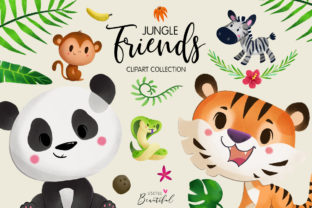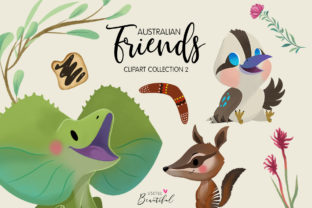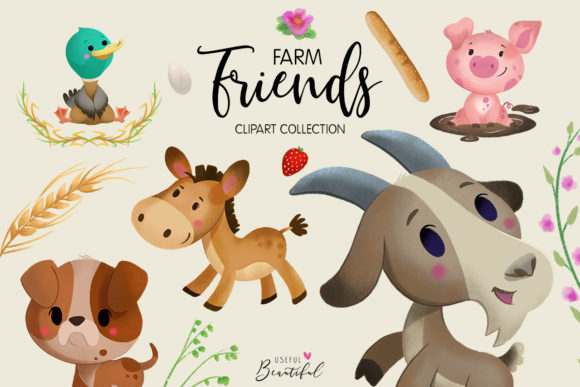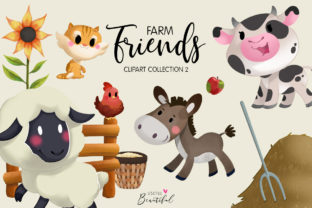
Forest Friends Clipart Collection 01 Design Guide
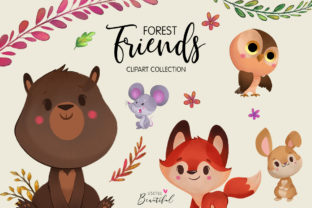
Creating a cohesive visual identity for nature-inspired projects often requires balancing whimsy with professional polish. Forest Friends Clipart Collection 01 addresses this specific design challenge by offering a curated set of illustrations that bridge the gap between playful character design and sophisticated botanical elements. Unlike generic stock imagery, this collection provides a unified aesthetic across five distinct characters and fifteen supporting graphics, ensuring that your invitations, branding materials, or digital content maintain a consistent narrative voice.
The visual personality of this collection leans into a soft, organic modernism. The characters possess enough detail to serve as focal points in editorial design or packaging, yet they retain a simplicity that prevents them from overwhelming accompanying typography. When integrating these assets into a layout, consider how the illustration style interacts with your chosen typeface. A handwritten font might amplify the rustic charm for a baby shower invitation, while pairing the clipart with a clean sans serif font can elevate the aesthetic for a contemporary children’s clothing brand. This versatility makes the collection a practical asset for designers who need to adapt a single visual theme across multiple touchpoints, from social media graphics to printed stationery.
Technical Specifications for Print and Digital Workflows
Understanding the technical foundation of your design assets is just as critical as their artistic merit. Forest Friends Clipart Collection 01 is delivered exclusively in PNG format with transparent backgrounds at 300 DPI in RGB color mode. These specifications are intentional and dictate how you should approach your production workflow.
The 300 DPI resolution ensures crisp edges when printing on physical products like t-shirts, stickers, or premium cardstock. For print designers, this means you can scale the elements down significantly without losing fidelity, though scaling up beyond the original dimensions should be done cautiously to avoid pixelation. The RGB color profile is optimized for digital screens, making these files ideal for web design, email newsletters, and social media content. However, if you are preparing a commercial print run using CMYK offset printing, you will need to convert the color profile during the prepress stage. Because the artwork features subtle shading and gradients common in modern illustration, always perform a test print to ensure color accuracy translates correctly from screen to substrate.
The transparent background is perhaps the most functional feature for mixed-media projects. It allows for seamless layering over textured papers, colored backgrounds, or photographic elements without the need for tedious masking. This is particularly valuable for scrapbooking enthusiasts and POD (Print on Demand) sellers who frequently composite multiple design assets to create unique product listings.
Strategic Applications Across Creative Disciplines
The true value of a clipart collection lies in its adaptability. While Forest Friends Clipart Collection 01 is rooted in woodland imagery, its application extends far beyond basic forest themes. Here is how different creative professionals can leverage these assets effectively:
- Brand Identity and Packaging: For small businesses in the eco-friendly or artisanal space, these graphics can serve as secondary brand marks. Use the floral elements as border accents on packaging labels or as watermarks on product photography to reinforce brand recognition without relying solely on a logo.
- Editorial and Publishing: Children’s book illustrators and self-publishers can use the individual leaves and florals to build custom scene compositions. Rather than treating each graphic as an isolated sticker, combine multiple elements to create depth and foreground interest in page layouts.
- Event Stationery: Wedding and event planners can utilize the characters for informal save-the-dates while reserving the botanical elements for formal menu cards or place settings. This creates a thematic thread that feels intentional rather than repetitive.
- Digital Content Creation: Bloggers and influencers can incorporate these graphics into Pinterest pins or Instagram story templates. The high contrast and clear silhouettes ensure readability even at thumbnail sizes, which is essential for driving engagement in crowded feeds.
Evaluating Visual Hierarchy and Composition
Incorporating cute animals and florals into a design carries an inherent risk: the imagery can sometimes overshadow the message. Successful integration of Forest Friends Clipart Collection 01 requires a disciplined approach to visual hierarchy. The characters are naturally high-interest elements that draw the eye immediately. Therefore, they should generally be positioned to lead the viewer toward key information, such as a headline or call-to-action, rather than competing with it.
When designing posters or greeting cards, treat the clipart as negative space management tools. The organic shapes of leaves and branches are excellent for framing text blocks or breaking up large areas of white space. This technique adds visual rhythm to static layouts. Conversely, avoid placing detailed character art directly behind body copy. Even with transparency, the varying opacity of illustrated textures can reduce legibility. Instead, use the simpler floral elements as subtle backdrops and reserve the complex characters for margins or dedicated image zones.
Consistency is another pillar of professional design. If you are creating a suite of products—such as matching nursery decor, apparel, and birth announcements—stick to a defined subset of the collection. Using all twenty graphics in a single project can create visual noise. Select two or three core elements that best represent the specific mood of the project and repeat them strategically. This restraint signals professionalism and helps establish a recognizable visual language for your audience.
Licensing, Customization, and Long-Term Value
Before deploying any digital asset in a commercial context, verifying usage rights is non-negotiable. While Forest Friends Clipart Collection 01 serves as a robust toolkit for entrepreneurs and creators, you must review the specific license agreement attached to your purchase. Understand the distinction between personal use, limited commercial use, and extended licensing for mass-produced items. Clarifying these boundaries upfront protects your business from potential intellectual property disputes and ensures ethical support for the original artists.
Beyond compliance, consider how these assets fit into your long-term creative strategy. Digital clipart should not be viewed as disposable decoration but as modular components of a larger design system. Experienced designers often modify base assets to extend their lifespan. You might adjust the hue saturation to match seasonal campaigns, crop elements to focus on specific details, or combine the forest friends with geometric shapes to create a more modern, hybrid aesthetic.
Ultimately, the effectiveness of this collection depends on your ability to contextualize it within broader design principles. Whether you are crafting a display font-driven poster or a delicate script-font invitation, the clipart should enhance, not replace, solid typographic and layout fundamentals. By approaching Forest Friends Clipart Collection 01 with both creative enthusiasm and technical discipline, you transform simple digital files into powerful communication tools that resonate with audiences and elevate the perceived value of your work.